OVERVIEW
INSIDE THE BOOK
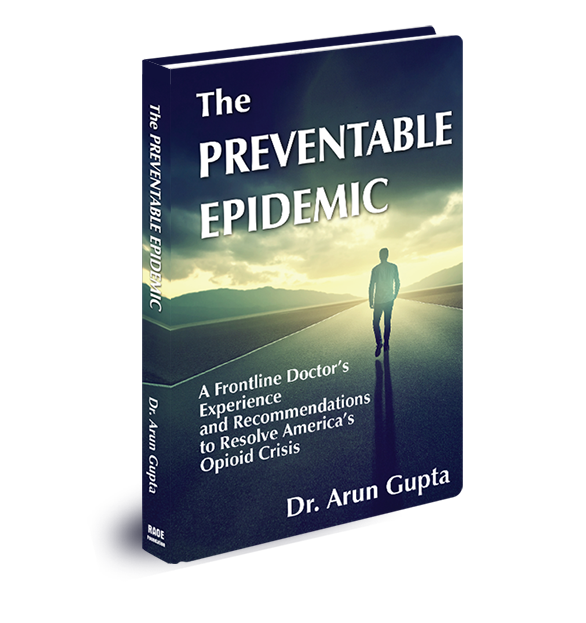
Our country's approach to the opioid epidemic, I believe, is headed in the wrong direction as it has resulted in the deaths of nearly 1.5 million people over the past twenty years
Mission Statement:
I can’t retire. Not until the Opioid Epidemic finally becomes a chapter in our country’s past.
Chapter 1:
It gets more complicated for doctors than just mixed messages from government overseers and big pharma meddling.
Chapter 2:
Nationwide cutbacks in prescriptions for opioids fueled a spike in heroin overdoses.
Chapter 3:
Cash is king not only out on the street but also in some doctors’ offices. Both patients and doctors have reasons for embracing a cash model of care.
Chapter 4:
In 2006, after years of feeling powerless to help those addicted to opioids, benzodiazepines, and stimulants, I joined the American Society of Addiction Medicine and earned my certification to treat patients with addictions.
Chapter 5:
There was no training about addiction in American medical schools or residency programs in the 20th century. My patients would tell me, “Dr. Gupta, don’t buy a car that was finished on a Monday or Friday.”
Chapter 6:
Given that U.S. policies and law enforcement are failing to win the war on drugs in catastrophic proportions, why not let medical science have another shot to fix this problem?
Chapter 7:
People needed opiates to treat pain, but dependence continued to compromise attempts by researchers to use drugs to treat both pain and dependence. Their dependence has not been ameliorated, it has not been treated, it may have been augmented, but the patient and society have gained
Chapter 8:
All the while Suboxone was being overregulated and underutilized, a window opened for Oxycontin, in large part because of one article. Jennifer Velander M.D stated, “Despite substantial evidence for its efficacy and well-developed models of care, buprenorphine remains underutilized.”
Chapter 9:
DEA Officials claimed the slow-release tablets were attractive for selling on the street simply because one pill would provide much more of a high. And why not? After all, the FDA stated it was less likely to be abused.
Chapter 10:
As the diversion of opioids slowed, an increase in the supply and a drop in the price of heroin caused former opioid addicts to transition into heroin. Merry-go-rounds are an antiquated metaphor for addiction. People get on the merry-go-round of gambling, perhaps, and it’s difficult to get off that merry-go-round
Chapter 11:
If a patient stays clean during pregnancy and follows the due process, they will have a healthy pregnancy and delivery leading to a safe and healthy baby. But it is immoral for all of us to continue to allow these patients and their families to accept it is a moral disease and let them die without providing adequate care
Women suffering from addiction also find themselves imprisoned in dysfunctional and even dangerous relationships simply because addicts struggle to maintain financial independence.
Chapter 12:
MAT does not end abuse. It does not erase emotional scars. It cannot wipe away the horrors that Molly endured as a child. I have the utmost respect for the American Society of Addiction Medicine (ASAM). They have provided a path toward treating my patients, and that has fundamentally changed my vocation as a doctor.
Chapter 13:
Laws were passed, and regulations were rightfully tightened to restrict access to these drugs.
As drug overdoses increased, law enforcement and later lawmakers traced the sources of opiates to several points of access, including hospice care.
Chapter 14:
You must understand that doctors are trying to comply with the literally thousands of regulations that have been thrown at them. If some doctors fail to follow those regulations down to every detail, they face serious punitive consequences.
Chapter 15:
The error was that the legislation simply was not aggressive enough. This act of legislation allowed any doctor, from general practitioners to specialists, to seek out training that would allow them to provide care for patients with addictions.
Chapter 16:
And why would an OUD sufferer take a drug that was designed to rob them of the high opioids offered? There’s only ever one reason: withdrawal. Again, DATA 2000 did not account for the reality that most doctors don’t want the risk.
Chapter 17:
Technology has changed, but the laws remain decades behind. This has created nightmares for all doctors, not just those practicing addiction or pain management. -DEA numbers—which empower doctors to be able to prescribe narcotics and are meant to expand patient access to care—have been the biggest obstacle thwarting our country’s attempts to combat the opioid crisis. X-DEA numbers, which empower doctors to be able to prescribe narcotics and are meant to expand patient access to care—have been the biggest obstacle thwarting our country’s attempts to combat the opioid crisis.
Chapter 18:
Many doctors don’t want to sacrifice “desirable” patients to help a few patients suffering from addiction. In the past 20 years, “pill mills” and “pain clinics” run by a few doctors with a long history of doling out unnecessary opiate-based painkillers have been weeded out
Likewise, the ACGME reports there are no addiction medicine residencies in any of the 8,887 accredited residency programs in the nation’s hospitals.
This is also the United States, not a third-world country where a lack of treatment options is compounded by a lack of resources.
For many conscientious, caring doctors, being an addiction doctor simply isn’t worth the risk.
Chapter 19:
After prolonged discussions, my current patients have gone through gradual dose reductions of Suboxone by 50 percent over 3 years since 2017. Herein lies the source of doctors’ reservations about practicing addiction medicine
Chapter 20:
If these barriers are removed and addiction doctors are considered on par with other specialties, that may encourage future doctors to consider addiction medicine as their preferred field of practice According to the SAMHSA website, there are 106,000 providers with X DEA numbers in 2021.
Chapter 21:
Respecting an addict's basic human dignity means they must have access to treatment. If they do not, we confirm their lives are not worth saving. Press coverage dwindled as fewer sensational stories of desperate addicts breaking into pharmacies made the headlines.
The Opioid Epidemic was growing and worsening but seemed to have lost the public’s attention.
My practice fails me if I treat my patients as possessing less than the basic human dignity, I afford my family and my colleagues.
The answers to these questions—and the many obstacles proliferating the Opioid Crisis—are outlined in the chapters ahead.
Chapter 22:
Treatment is not a matter of asking the right questions in therapy, prescribing the right dose of Suboxone, and completing the steps on the checklist. The US has devoted over 100 years and billions of dollars to research treatments. Even the number 464 is misleading.
Suboxone is consistently missing at autopsy while fentanyl-laced oxycontin or heroin are still responsible for 60% of the overdose deaths in the past six years.
While the prohibition of alcohol did not go well and I’m not suggesting we return to it, the regulation of buprenorphine, comparatively, doesn’t justify such oppressive regulation.
It’s time we risk changing our failed approach so that we can help those of us who are at risk.
Chapter 23:
Even small, day-to-day strides in treatment need to be noted and celebrated. While Suboxone and buprenorphine, in general, have risks, diversion may mean addicts are using a safer, non-addictive drug than heroin and prescription opioids.
Chapter 24:
Based purely on my experience, it is best that everyone prescribed suboxone have it legitimately available. If this is the case, I don’t believe there will be major instances of diversion.
Chapter 25:
There is no Diversion Control Plan (DCP) for narcotics. If there was one, we would not have an opioid epidemic. But there is one for suboxone/buprenorphine. Unfortunately, regulation is always the simplest solution to any problem. Too many opioid addicts? Regulate prescription opioids and solve problems, right?
Chapter 26:
If getting CPAP supplies to a patient in need – something which should be so simple because, after all, they aren’t regulated the way scheduled drugs are - was so absurd, inefficient, and difficult, imagine how much more it is to get addiction treatment for a patient in need
Chapter 27:
I urge that every physician should use this program, especially if they are writing any restricted drugs. However, it currently remains a best practice for physicians but not a requirement The result was overdose deaths continuing to climb, both in Monroe and nationwide
Chapter 28:
I could better treat my patients if excessive regulations did not equate to risk. Period.
As death rates continue to escalate, it’s increasingly clear that pill mills weren’t fueling the opioid epidemic.
Chapter 29:
"Drug testing should not face undue restrictions; decisions about types and frequency of testing should be made by ordering physicians, and arbitrary limits on reimbursement by payers interfere with the physician's judgment and violate federal law parities. “
Chapter 30:
Two things were common in patients who were abusing Neurontin and who had died from overdose deaths: They had Gabapentin in their pockets or in their possession at the time of death.
Chapter 31:
The medical profession is trusted to save lives. Unfortunately, there was no education in medical schools or residency programs to deal with chronic pain and addiction until 2020.
Chapter 32:
It's a good reminder that we might not always need a Cadillac model of treatment; it is imperative that we have what is essential and the right people providing it. About 155,000 DATA 2000-waivered providers represent the Kia version of addiction doctors. (I am proud I am one of them.)
He drove an old pickup to work even after he had become a billionaire several times over. He had what was essential for his job.
Chapter 33:
I also sympathize with doctors treating patients while receiving no extra money for personal protection equipment, cleanliness, or even COVID-19 swabs. Doctors cannot charge patients for administering COVID-19 vaccines
Chapter 34:
“Jails are big business,” she once told me. “They have more funding than schools.” I love the name of her church, Oaks of Righteousness Christian Church. What we know to be truly right stands tall and strong in front of us.
Chapter 35:
Today, only 25 percent of American doctors are members of the AMA. Instead, physicians can’t fight profit-driven, politically driven, or even ineffective bureaucracies like insurance companies, regulatory agencies, and even law enforcement
Chapter 36:
“Sometimes I think that it was easier for me to fix somebody's aortic aneurysm than it is to start them on Suboxone in the office,” said Dr. John Kitzmiller, we’re here today to discuss one weapon in the fight against this epidemic,” Levin told the panel. “To learn about its successes and about the impediments to deploying it more widely.”
We had the possible solutions to this problem mapped out by 2014. Those solutions were clear and straightforward. But more than seven years later, we still haven’t made real progress in achieving those solutions and increasing access to buprenorphine
Chapter 37:
We must focus on success stories about how well about two million people are doing on MAT in America. I have several hundreds of these patients who express their gratitude for being alive and are now productive citizens. We have a national crisis and emergency in our country. How can we restrict care to access? Once a physician is credentialed, why place limits on them?
"The medical evidence is clear, Adm. Brett P. Giroir, assistant secretary for HHS, said in a January 2021 statement, “Access to medication-assisted treatment, including buprenorphine that can be prescribed in office-based settings, is the gold standard for treating individuals suffering from opioid use disorder.
Chapter 38:
First is the misguided and irrational belief that breaking an addiction only needs to happen once. This simply isn’t the case. Diversion is not the problem but is instead a symptom of treatment needs simply not being met.
Three obstacles have exacerbated this opioid epidemic in recent decades.
Chapter 39:
A; The population at large and the families left behind or still struggling with their loved ones need help, and no one is looking and asking what can and should be done. Implementing the following six changes could have a massive impact on diminishing the toll of the opioid epidemic
On the other hand, neither our society nor addiction doctors will contain this crisis if the same stifling regulations and oversight continue unnecessarily. We need to abolish them in favor of open access to care if we want to save lives.
Patients with OUD will not have to find heroin or deadly Fentanyl at the corner or fear a fix for their withdrawal or be concerned about a deadly overdose!
I must applaud SAMHSA for its efforts to approve a measure that OTPs/methadone clinics can dispense methadone to patients at their homes using a mobile van.
Chapter 40:
A; As of 2021, we have only enough to care for no more than two million patients, which may cover only about 10 percent of addicts in the United States. I hereby conclude that our country’s approach to the opioid epidemic is all wrong.



Chapter 1
It gets more complicated for doctors than just mixed messages from government overseers and big pharma meddling.
Chapter 2
Nationwide cutbacks in prescriptions for opioids fueled a spike in heroin overdoses.
Chapter 3
Cash is king not only out on the street but in some doctors’ offices too. Both patients and doctors alike have their reasons for embracing a cash model of care.
Chapter 4
In 2006, after years of feeling powerless to help those addicted to opioids, benzodiazepines, and stimulants, I joined the American Society of Addiction Medicine and earned my certification to treat patients with addictions.
Chapter 5
There was no training about addiction in American medical schools or residency programs in the 20th century.
Chapter 6
Given that U.S. policies and law enforcement are failing to win the war on drugs in catastrophic proportions, why not let medical science have another shot to fix this problem?
More Chapters
© Copyright 2022 All Rights Reserved